Sephona – From Manual Workflows to a Scalable SaaS Platform
Sephona began as a concept to manage kiosks, brand operations, and insights from a single platform. Initially, most work was handled manually using static Excel sheets and disconnected tools.
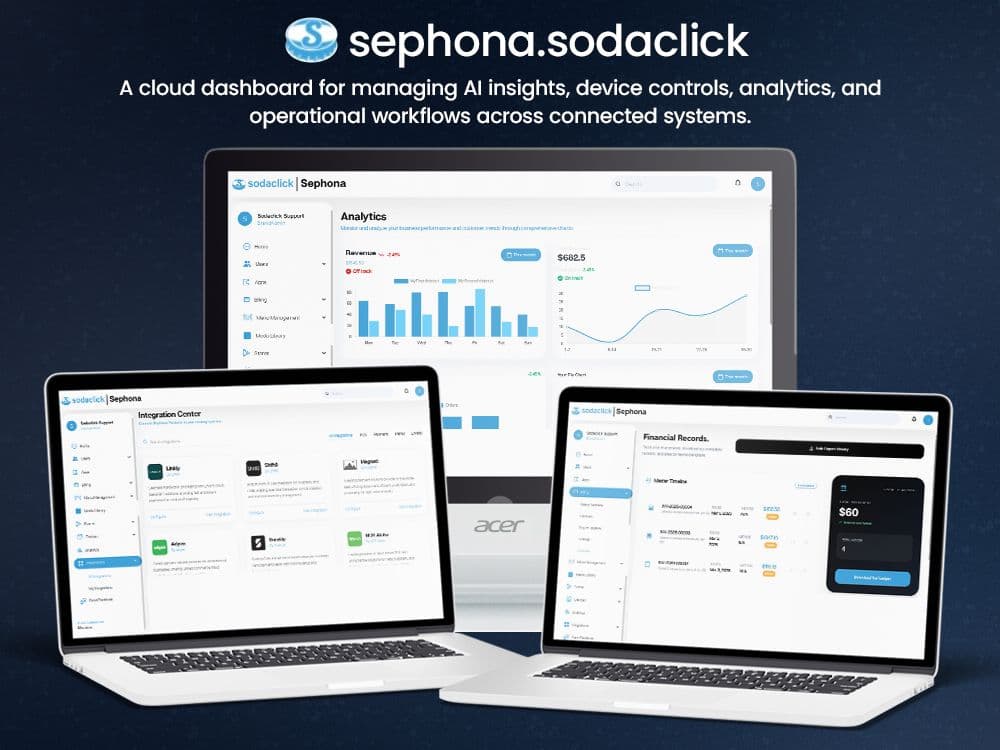
Context
Sephona began as a concept to manage kiosks, brand operations, and insights from a single platform. Initially, most work was handled manually using static Excel sheets and disconnected tools. While this approach worked at first, it quickly became difficult to manage as the business scaled.
The real problem wasn’t just the lack of a dashboard—it was a scattered system that caused inefficiencies:
- No clear system in place; everything was scattered.
- Manual Excel-based workflows, which were slow and error-prone.
- No real-time visibility of kiosks or operations.
- Difficulty managing multiple brands, subscriptions, and devices.
- No structured way to control pricing, offers, or content.
My Approach
Instead of jumping straight into development, I first focused on understanding how things worked:
- Studied existing Excel workflows to identify pain points
- Broke down processes into smaller steps for clarity
- Created flowcharts and mind maps to visualize workflows
- Defined what should be part of the MVP and what could wait
The goal was to convert messy, manual processes into a structured system before writing code.
Shaping the Product
Once the workflows were clear, I worked on structuring the product:
- Defined connections between brands, kiosks, and apps
- Designed scalable data structures
- Supervised UI/UX direction to ensure simplicity for end users
- Focused on building only the MVP features first
This approach helped avoid over-engineering and kept development focused.
Building the System
During development and integration, I implemented:
- Centralized dashboard for managing brands and kiosks
- Real-time communication using Socket.IO
- Subscription and license management system
- Payment handling for plans and services
- Brand-level customization (branding, configs, apps)
- Integration with third-party services for live data and reviews
- Dynamic pricing, offers, and package control
All components were designed to work cohesively, not as isolated features.
Key Challenges
1-Manual → System Conversion
- Turning Excel-based logic into a functioning system was complex.
- Solution: Break workflows into smaller units and map them before development.
2-Real-Time Device Management
- Kiosks required live updates and control.
- Solution: Used Socket.IO for real-time communication between system and devices.
3-Multi-Brand Complexity
- Each brand had unique needs (pricing, apps, configurations).
- Solution: Built a flexible structure allowing individual brand setups without breaking the system.
4-Prioritization (MVP)
- Too many potential features initially.
- Solution: Focused on high-impact features first for faster delivery and testing.
Outcome
- Replaced manual workflows with a structured, scalable system
- Enabled real-time monitoring and control of kiosks
- Simplified onboarding for new brands
- Created a flexible platform that supports future growth
What This Project Taught Me
- Understanding the business problem is more important than jumping into development
- Clear structure and planning save significant time later
- Real-time systems require careful architectural thinking
- Simplicity is essential when dealing with complex operations
Final Thought
This project stands out because it started with uncertainty—no clear system or structure—and evolved into a fully functional platform that unified everything in one place.
That transformation is where the real impact was created.